Joanne Limburg Papers

By John W., 24 May 2012 11:57 am
Joanne Limburg

Joanne Limburg. Photograph: Chris Hadley.

For some time the Library has been engaged in building its collections of papers of modern and contemporary poets with local Cambridge connections, whether to the town or the University. Accessions of archival material relating to writers as varied as Siegfried Sassoon, Nicholas Moore, Anne Stevenson and Peter Scupham have significantly enhanced our holdings in this area in recent years.

Last month we were delighted to receive the generous donation of a collection of poetry drafts by Joanne Limburg. Born in London in 1970, Joanne read Philosophy at King’s College Cambridge, and was a Royal Literary Fund Fellow at Magdalene College from 2008 to 2010. The recipient of an Eric Gregory Award in 1998, she has had two full-length volumes of verse published by Bloodaxe Books: Femenismo in 2000, which was shortlisted for the Forward Prize for Best First Collection, and Paraphernalia in 2007, which was a Poetry Book Society Recommendation. A pamphlet collection, The Oxygen Man, has recently been published by Five Leaves Press. Keep reading …

Cambridge Bibliographical Society talk, 16 May 2012

By Special Collections, 11 May 2012 9:04 am

Dr Mark Curran, Munby Fellow, will give a talk on ‘Beyond the forbidden best-sellers of pre-Revolutionary France’ on Wednesday, 16 May, 5:00 pm in the Morison Room, Cambridge University Library as part of the programme of events for the Cambridge Bibliographical Society. Non-members are welcome and there is no admission charge. Tea is served from 4:30 pm.

More Music Collectors…

By Clemens, 7 May 2012 8:50 am

Shelf Lives logoA previous post on this blog, titled Music collectors’ ‘Shelf Lives’, alerted you to the fact that MusiCB3, the blog of the Music Collections at the University of Cambridge, would dedicate some posts to ‘Music Collectors’ whilst ‘Shelf Lives: Four Centuries of Collectors and their Books’ was on display (so until 16 Jun 2012).

The latest installment in this series is on Richard Pendlebury, and explains the connection of Pendlebury to the Faculty of Music’s library.

If you would like to read previous posts in this series, or want to keep track of future posts on music collectors, please go to, or bookmark http://musicb3.wordpress.com/tag/music-collectors/.

Cambridge collectors: The last of his kind: George Parker Bidder

By Special Collections, 1 May 2012 1:54 pm

Bidder bookplateThe University Library’s exhibition ‘Shelf Lives: Four Centuries of Collectors and their Books’ runs for another six weeks until 16 June 2012.

Dawn Moutrey continues our theme of Cambridge collectors with a recent post on George Parker Bidder (1863–1953), whose collection of some sixty books on subjects including physiology, natural history, zoology and calculus is held at the Whipple Library. Bidder’s obituary in Nature described him as ‘the last of his kind—that of the great amateur biologists of the past century’.

Read the full post on the ‘Whipple Library Books Blog’ …

Rehabilitating Henrietta

By Special Collections, 12 April 2012 10:54 am
Henrietta Darwin

Henrietta Darwin at the time of her marriage

A small lockable leather diary in the archive at Cambridge University Library is leading us to reassess one of the key relationships in Charles Darwin’s life.

With the permission of Darwin’s family, Volume 19 of The Correspondence of Charles Darwin, which we’re publishing this week, is making public for the first time the short but intense – and intensely revealing – personal journal of Darwin’s daughter, Henrietta.  Written over the period March to July 1871, the year of the 28-old Henrietta’s sudden marriage to a man she had known for less than three months, the journal introduces a confident, intelligent, reflective, and passionate young woman. To anyone who has only met her as the overly anxious hypochondriac aunt in Gwen Raverat’s Period Piece, this Henrietta is unrecognisable. Keep reading…

A Claudel archive

By John W., 5 April 2012 4:49 pm

Claudel postcard address

Claudel's last postcard to Audrey Parr, addressed using her married name, sent from Paris in November 1939. MS Add. 9591/133.

During the First World War, the poet, playwright and diplomat Paul Claudel (1868-1955) struck up a friendship with Audrey Parr, the wife of a British diplomat. Her granddaughter, Mrs L. M. Jack, generously presented the Claudel letters, postcards verses and books accumulated by Mrs Parr to the University Library, and an online catalogue of the archival material has recently been added to Janus.

Claudel first met Audrey Parr during the First World War. The daughter of a French Alsatian father and a British mother of Polish and Brazilian parentage, Audrey had married Raymond Parr, then Third Secretary in the British Embassy in Rome, in 1913. Claudel undertook a mission there in 1915-16, and the friendship deepened when both Raymond Parr and Claudel were appointed in Rio de Janeiro. In Brazil Audrey Parr collaborated with Claudel and his secretary, the composer Darius Milhaud, in the ballet L’Homme et son Désir, for which she provided set designs. She and Claudel met intermittently in the 1920s as he and Raymond Parr pursued their careers to various countries; Claudel was made ambassador to Tokyo and Washington, while the Parrs were posted to Teheran. After the Parrs’ separation in 1930 Audrey settled in London, and married Captain Norman Colville in 1938. On the outbreak of the Second World War she enlisted as a nursing officer in the Red Cross, and was killed in a road accident between Launceston and Egloskerry on 7 May 1940.
Keep reading …

View the Library’s treasures cover to cover

By Special Collections, 29 March 2012 3:33 pm
God creates Adam

God creates Adam. From the hand-coloured copy of the Nuremberg Chronicle presented to the Library in 1574 by Archbishop Matthew Parker (Inc.0.A.7.2(888))

Further content and functionality has been added to the Cambridge Digital Library. We have added more items to the Islamic Manuscripts and Newton collections—including several videos explaining Newton’s work and ideas—and have initiated two new collections: The Cairo Genizah collection and Treasures of the Library. Both these collections will grow considerably over the the next few months. The initial Genizah collection includes a selection of seventy-two manuscripts, intended to show the wide range of material in this fascinating collection. Among the Treasures we’ve added to the Digital Library are the Codex Bezae, Life of St Edward the Confessor, Nuremberg Chronicle, and Montaigne’s copy of Lucretius’ De rerum natura. The last three works are featured in the current Library exhibition, Shelf Lives. Now you can view these treasures in great detail, from cover to cover.

Cambridge Bibliographical Society talk, 21 March 2012

By Special Collections, 19 March 2012 8:00 am
Illuminated initial from Lactantius' works (Subiaco, 1465)

Illuminated initial from Lactantius, Opera (Subiaco, 1465). Inc.3.B.1.1(1122)

Dott. Laura Nuvoloni (Incunabula Project Cataloguer, Cambridge University Library) will give a talk on ‘Witnesses of the past: the Incunabula Collection at Cambridge University Library’ on Wednesday, 21 March, 5:00 pm in the Morison Room, Cambridge University Library. Non-members are welcome and there is no admission charge. Tea is served from 4:30 pm.

Details of the Society’s full programme are available at
http://www.lib.cam.ac.uk/cambibsoc/programme.htm.

The Crimean War letters of Captain Blackett

By Frank, 15 March 2012 10:02 am

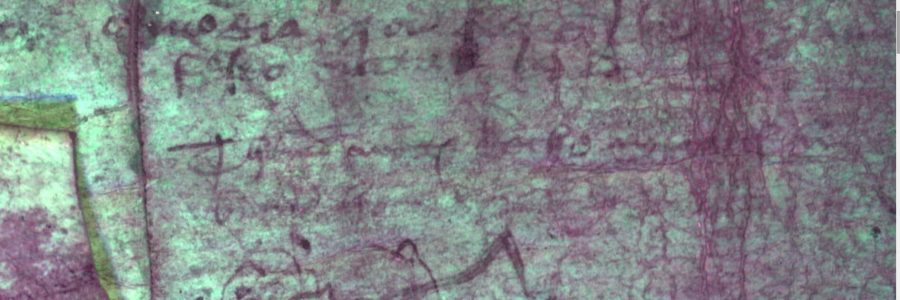
Extract from Add.9587/11

Alma Crimea

Sep th 21st

My dear Father,

I have hardly a moment, but take the present opportunity of letting you know that all is well with me. We fought a pitched battle yesterday [and] drove the Russians from a very strong entrenched position along a chain of hights at least they were in force all along them with very here [and] there strong batteries, my Regt has lost only some five or six killed [and] about forty five wounded but the carnage in some has been absolutely awful the 23d [and] 33d particularly the former have lost a great many…..


With the no doubt welcome news that he is not to be numbered amongst the casualties, (‘in fact I look on it as only the interposition of a merciful providence that I was not hit myself’), Captain Christopher Edward Blackett (1826-1904) of the 93rd Highland Regiment (later of the Coldstream Guards) begins his account of the Battle of the Alma, fought on the 20th September 1854, in a letter to his father [Add.9587/11]. This letter is one of a series of 52 written by him to his parents during the Crimean War, with the majority of the letters (from June 1854 to April 1856) written from the field in the Crimea. Recently added to Janus (the online catalogue for Cambridge archives) by the manuscripts department, this collection (Add.9587), is one of a number of manuscript collections with relevance to the Crimean War (1853-1856) .
Keep reading …

Cambridge Science Festival at the University Library

By Special Collections, 7 March 2012 11:32 am

Science Festival logoCambridge University Library is pleased to present two events for the 2012 Science Festival, to which you are warmly invited.

The lectures are free, but due to the popularity of the Festival, booking is required for both events. You can book online at the Cambridge Science Festival website or by following the links below.

Airy, Challis and the Northumberland Telescope
Thursday 15 March, 17:00–18:15 (archive documents available for view from 16:45)
CUL Morison Room
Talk/exhibition, recommended for 14+ years

Northumberland TelescopeThe Northumberland telescope, erected at Cambridge University Observatory during the 1830s, and still in use, was one of the great engineering triumphs of nineteenth century science. Its origin, design and construction reveal much of how science, technology and policy interacted in a period of major debates about support for research and the role of the University in the sciences. Professor Simon Schaffer explores why the instrument was built and how it came into use in those troubled times.

John Gould’s illustrated bird books
Monday 19 March, 17:15–18:30
CUL Morison Room
Talk/exhibition, recommended for 12+ years

Gould birdJohn Gould (1804–1881), ornithologist, author and taxidermist was responsible for the production of some of the most lavish and elegant illustrated books on birds ever produced. The son of the Royal Gardener at Windsor, Gould was a self-trained taxidermist, by 1824 established as one of London’s foremost ‘bird-stuffers’. His expertise led to his appointment as the first Curator of the Zoological Society Museum and ultimately to his introduction to the country’s leading naturalists, including Charles Darwin.

Although Gould was a pioneering ornithologist and the author of the section on birds in Darwin’s initial report on The zoology of the Voyage of H.M.S. Beagle, he is still best remembered for his series of vast lithographic plate books. This is a rare opportunity to see and hear about a selection of these extraordinary and beautiful books from the Rare Books Department of Cambridge University Library.

www.cam.ac.uk/sciencefestival
#csf2012